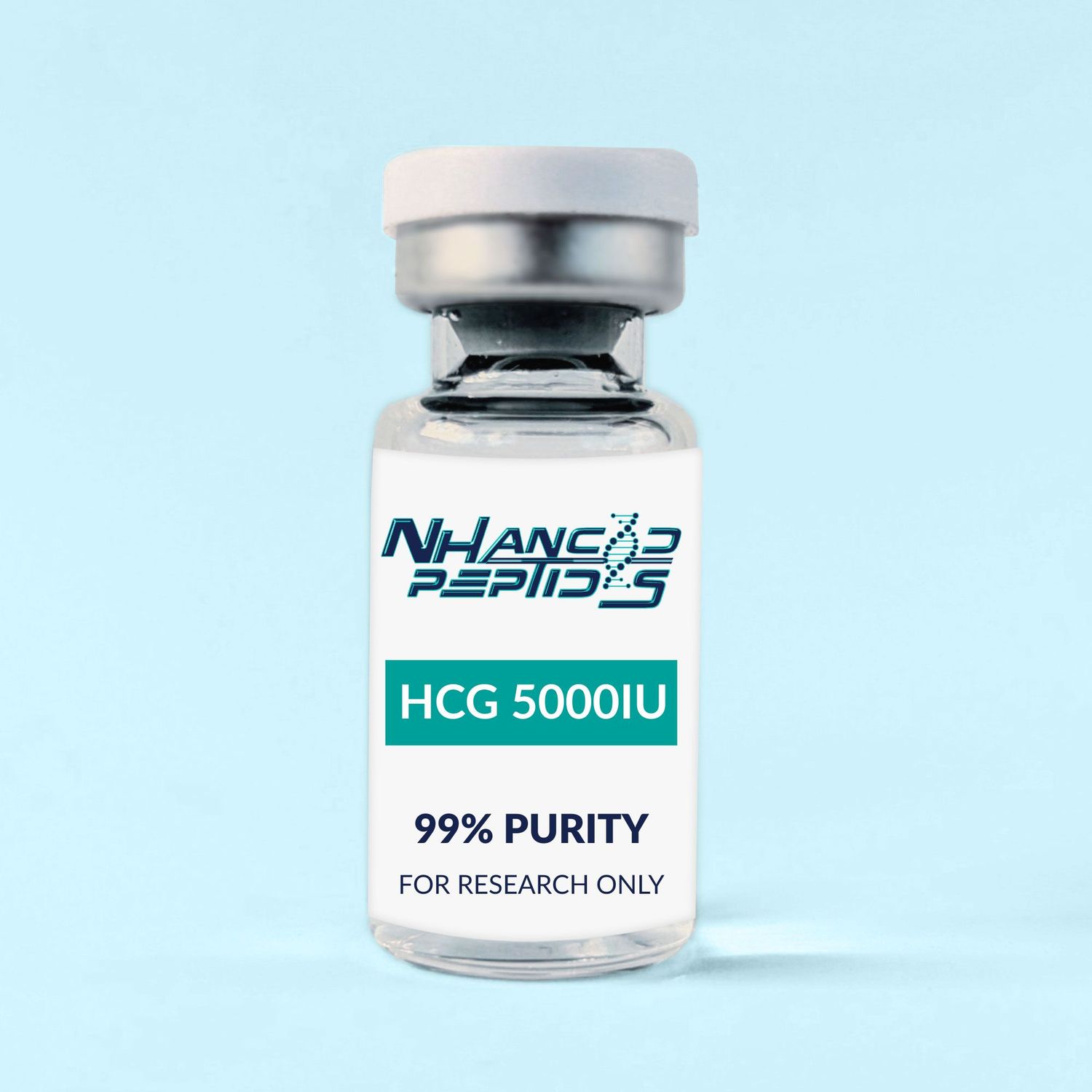
HCG 5000iu
$60.00
In stock
Product Details
Human Chorionic Gonadotropin (hCG 5000 IU) is a naturally occurring peptide hormone composed of 237 amino acids, structured with three intramolecular disulfide bridges and a molecular weight of approximately 36.7 kDa. Unlike anabolic steroids, hCG is a glycoprotein hormone produced naturally by the embryo during early pregnancy and later by the placenta. Its biological role in pregnancy includes supporting hormone regulation and preparing the uterine lining for successful implantation.
In the body, hCG functions in a manner similar to luteinizing hormone (LH), which is why it is often described as mimicking LH activity. Both hCG and LH belong to a class of hormones known as gonadotropins—substances that stimulate the gonads, including the testes and ovaries.
Structurally, hCG is a heterodimeric hormone made up of two subunits: an alpha subunit shared with other glycoprotein hormones such as LH, follicle-stimulating hormone (FSH), and thyroid-stimulating hormone (TSH), and a unique beta subunit that gives hCG its specific biological activity.
Because hCG mimics LH, it can bind to receptors on Leydig cells in the testes, stimulating the natural production and secretion of testosterone. This LH-like action makes hCG significant in supporting hormonal balance and maintaining normal testicular function.
LH itself is produced by the pituitary gland and plays a critical role in signaling the testes to produce testosterone. FSH, another gonadotropin regulated by gonadotropin-releasing hormone (GnRH), supports testicular growth and the function of Sertoli cells, which are essential for sperm development and maturation.
TSH, another related glycoprotein hormone, is regulated by thyrotropin-releasing hormone (TRH) from the hypothalamus and stimulates the thyroid gland to produce triiodothyronine (T3) and thyroxine (T4), hormones responsible for regulating metabolism.
The shared structural relationship between hCG, LH, FSH, and TSH highlights the unique role of hCG within the endocrine system. Through its LH-like activity, hCG remains widely recognized for its role in hormonal signaling, reproductive function, and physiological support.
HCG 5000iu